Few small injuries cause quite as much quiet frustration as a torn or stretched earlobe. Perhaps an earring caught on a jumper, or was grabbed by an enthusiastic toddler; perhaps years of wearing heavier earrings have gradually lengthened a neat piercing into a long slot; or perhaps a deliberately stretched piercing from an earlier chapter of life no longer feels like you. Whatever the route, the result is much the same — earrings will not sit properly, or cannot be worn at all, and a feature you had rarely given a thought to begins to catch your eye in every mirror. The reassuring news is that earlobe repair is one of the most reliable and satisfying small procedures in plastic surgery.
How earlobes tear and stretch
The earlobe is soft, mobile and constantly on show, and a pierced lobe carries a small built-in point of weakness. Damage tends to happen in one of three ways:
- Gradual stretching: years of wearing heavy or dangling earrings slowly draw the piercing hole downwards, turning a neat dot into an elongated slot. The bridge of tissue below it becomes thinner and thinner, and may eventually give way altogether.
- Sudden tears: an earring caught on clothing, a hairbrush or a child’s hand can pull straight through the lobe in an instant, splitting it in two.
- Deliberately stretched piercings: flesh tunnels and gauged piercings expand the lobe intentionally, leaving a wide, skin-lined tract that will not shrink back to normal once the jewellery is removed.
However it happened, a damaged lobe rarely improves on its own. The tract of a long-standing piercing is lined with healed skin, which is precisely why a split or stretched hole does not simply knit back together.
The good news: almost every earlobe can be repaired
Because the earlobe is soft tissue with a generous blood supply and no cartilage, it heals well and lends itself to precise repair. Whether you have a partially stretched hole, a completely split lobe or a large tunnel, a repair is possible in almost every case, and both ears can comfortably be treated in a single visit. Patients often arrive apologising for bringing something so small to a consultant — there is no need. It is a genuine, fixable problem, and putting it right makes a disproportionate difference to how people feel about their appearance.
What the procedure involves
Earlobe repair is carried out under local anaesthetic as a day-case procedure, and typically takes between 30 and 60 minutes depending on whether one or both ears are being treated and how complex the repair is. Once the lobe is numb, you should feel nothing more than gentle pressure.
The first step is to remove the healed skin lining the split or stretched tract — leaving it behind is the main reason simple attempts at closure fail. The edges are then freshened to healthy tissue and the lobe is rebuilt in layers: deeper stitches restore the substance and shape of the lobe, while fine sutures bring the skin edges together neatly. The aim throughout is a smooth, natural contour with the join sitting as inconspicuously as possible. You go home the same day with a small dressing and simple aftercare instructions.
Rebuilding stretched and gauged lobes
A stretched lobe is a different challenge from a straightforward split. Simply closing the hole would leave the lobe long, thin and misshapen, so these repairs are better thought of as a small reconstruction. The excess skin-lined tract is removed and the remaining tissue is reshaped to recreate the natural rounded curve of the lobe’s free edge. Where a very large tunnel has been worn, there is simply less tissue to work with, and the finished lobe may end up slightly smaller than it was before the piercing was ever stretched — for most patients, a very acceptable trade for a natural shape. Careful planning at consultation, assessing exactly how much healthy tissue remains, is what makes the difference here.
"Earlobe repair is one of the smallest operations I perform, and one of the most satisfying. Patients often tell me they have put up with a torn lobe for years — and most are surprised by how straightforward the repair turns out to be."
Recovery: the first two weeks
Recovery is refreshingly simple. You can return to normal daily activities almost immediately — most people are back at work the same or the next day. For the first few days the priority is to keep the area clean and dry, following the simple wound-care instructions you are given. The sutures are removed at around one week, by which point the lobe is usually well on its way to healing.
The main thing to avoid early on is pressure. Try not to sleep on the treated side for the first couple of weeks where you can, take care when pulling clothes over your head, and avoid pressing a phone against that ear. A little swelling and pinkness along the repair is entirely normal and settles over the first fortnight.
Scarring — and the earlobe’s keloid tendency
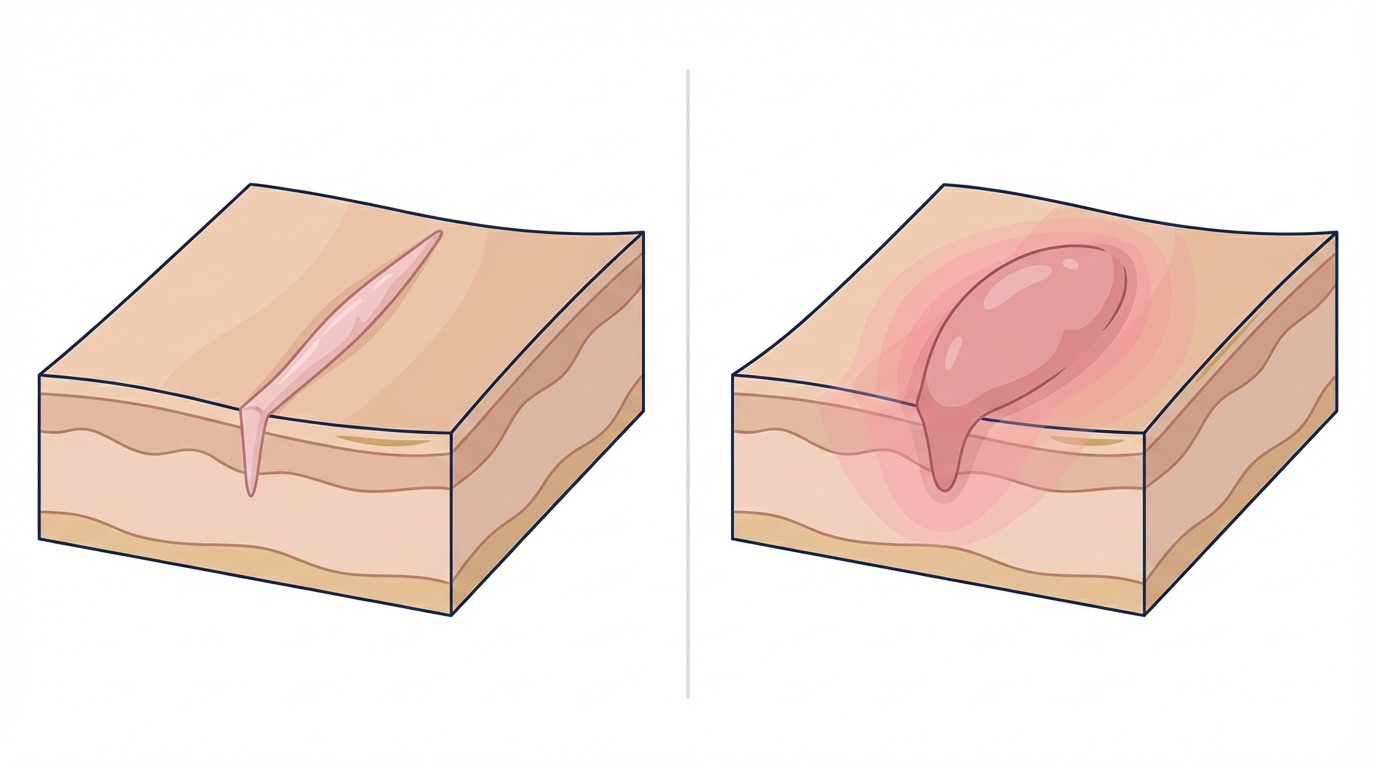
Every repair leaves a scar, and honest expectations matter. In most patients this is a fine line along the closure that softens and fades to something pale and inconspicuous over the following months. The earlobe, however, is one of the body’s more keloid-prone sites, so if you or a close family member have a history of keloid or raised scars, it is important to mention this at consultation — it will shape both the surgical plan and your follow-up.
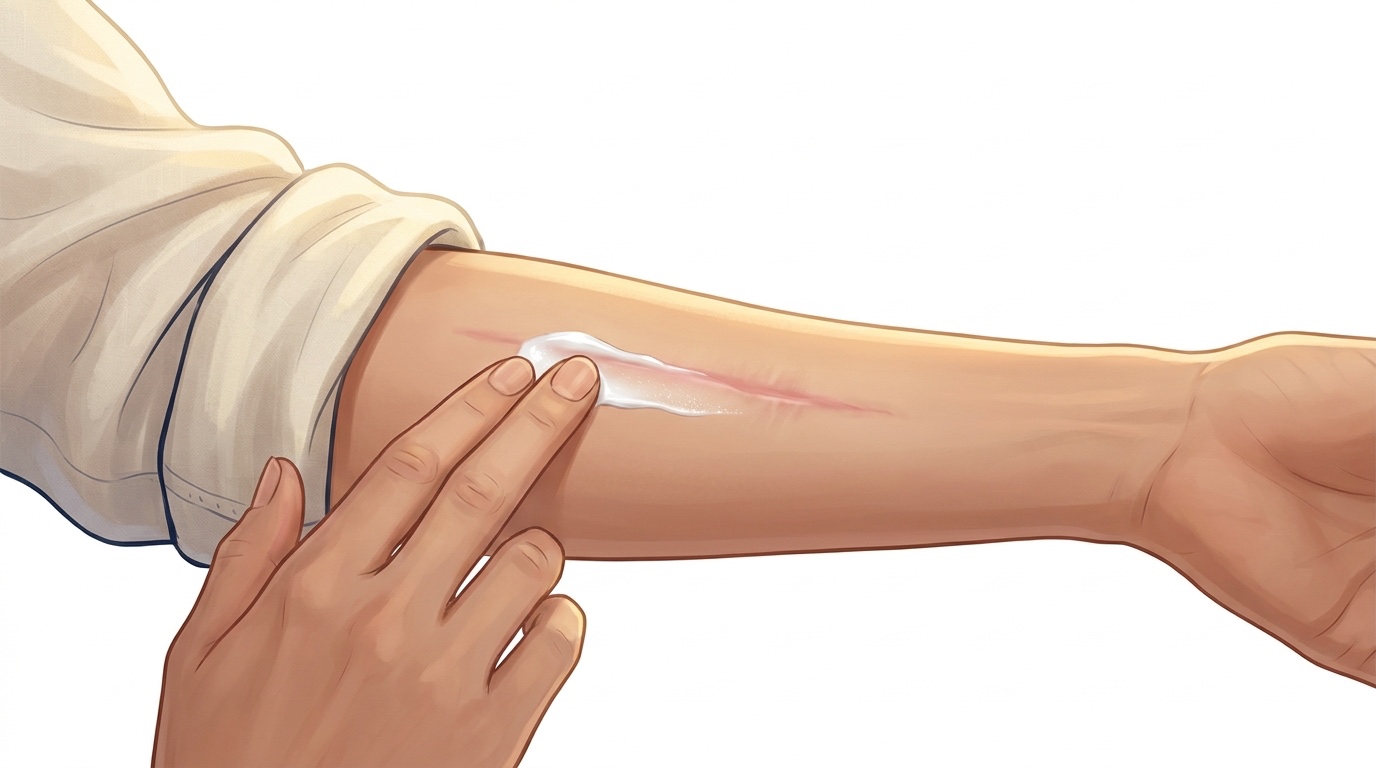
The features to watch for in the weeks and months after surgery are a scar that becomes increasingly raised, firm or itchy, or one that starts to grow beyond the line of the original wound. Caught early, raised scars respond well to treatment — silicone gels or sheets and steroid injections are the usual first steps — which is one reason repairs are followed up rather than simply stitched and forgotten.
Re-piercing after repair
Most patients understandably want to wear earrings again, and in the great majority of cases they can. Re-piercing is usually possible once the scar has matured — commonly around three months after surgery. The new piercing is placed just to the side of the repair rather than through the scar line itself, as scar tissue is never quite as robust as untouched lobe. It is also sensible to favour lighter earrings, at least at first, so that history does not repeat itself.
Conclusion
A split or stretched earlobe is a small problem, but often a persistent and nagging one — and it is very fixable. You can read more about what is involved on our earlobe repair page, or, if your concern is lobes that have simply lengthened or enlarged with age rather than torn, our earlobe reduction page. Patients with a history of problematic scarring may find our page on keloid scar treatment reassuring reading, and if your repair will be healing over the warmer months, our guide to protecting healing scars in the sun is a worthwhile companion.
If you would like your earlobes assessed, a consultation with Mr Singh will confirm what is needed and give you a clear, realistic picture of the result you can expect.