Mole & Skin Check
Peace of mind through specialist dermoscopy-based skin examination, delivered by an experienced skin cancer specialist. For worried patients, high-risk individuals, and those wanting a professional second opinion.
Who Should Have a Skin Check
A professional skin examination is particularly valuable if any of the following apply to you. If you recognise yourself in one or more of these categories, a baseline skin check provides reassurance and early detection of anything concerning.
Fair Skin Types
Fair skin, blue or green eyes, red or blonde hair (phototype I or II). These features are associated with a significantly higher lifetime risk of skin cancer.
Multiple or Atypical Moles
Patients with more than 50 moles, or who have moles that appear unusual or irregular (atypical naevi), benefit from regular professional review.
Personal or Family History
A personal history of skin cancer, or a first-degree relative with melanoma, increases your risk and warrants ongoing surveillance.
Previous Significant Sunburns
Especially blistering sunburns in childhood or adolescence — these double the lifetime risk of melanoma.
History of Tanning Bed Use
Use of sunbeds, particularly before the age of 35, markedly increases the risk of both melanoma and non-melanoma skin cancers.
Immunocompromised Patients
Transplant recipients and those on long-term immunosuppressant medication have a dramatically increased risk of skin cancer.
Age Over 50
Skin cancer risk increases significantly with cumulative UV exposure and age. Baseline screening becomes particularly valuable from midlife onwards.
Outdoor Lifestyle
An outdoor occupation or hobby — gardening, sailing, cycling, golf — results in chronic UV exposure that accumulates over decades.
A Changing Lesion
Any mole or lesion that has changed in size, shape, colour, or symptoms should be assessed promptly, regardless of other risk factors.
What Happens at Your Mole Check
A mole check appointment is unhurried, thorough and tailored to you. From the moment you arrive to the moment you leave, you will have the full attention of a skin cancer specialist.
Detailed History
Around 15 minutes
We begin with a careful discussion of your concerns, personal and family history of skin cancer, sun exposure, previous skin lesions and any specific moles that are worrying you.
Full Skin Examination
Head-to-toe review
A systematic, head-to-toe examination of the skin under good lighting, including behind the ears, between the toes, soles of the feet and other easily missed sites.
Dermoscopy of Lesions
Targeted assessment
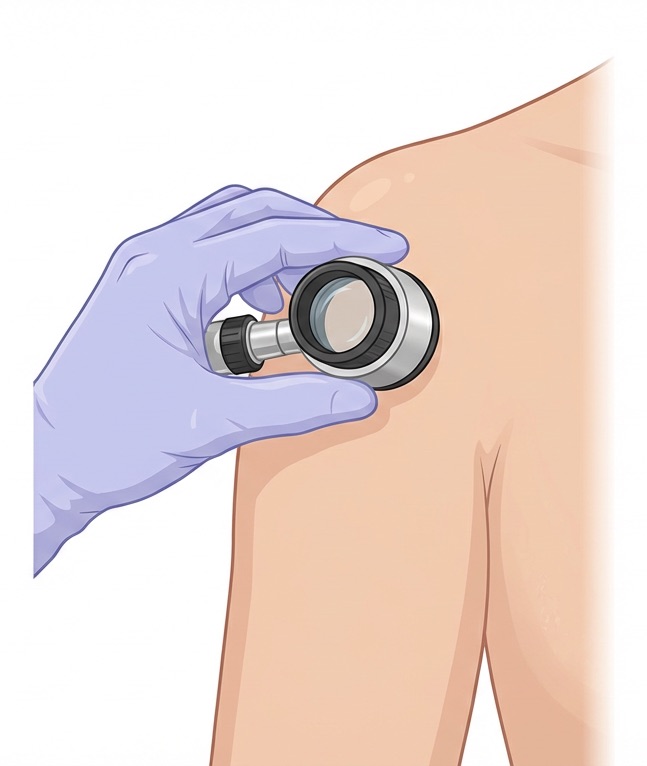
Any suspicious or atypical lesions are assessed with a handheld dermatoscope — a specialist magnifying device that allows detailed evaluation of structures beneath the skin surface.
Clear Plan
Reassurance or action
You leave with a clear plan: reassurance where appropriate, excision of anything concerning, photographic monitoring, or onward referral as needed. Everything is explained fully.
What is Dermoscopy?
Dermoscopy is the use of a specialist handheld device — a dermatoscope — that combines magnification with polarised light to allow the examiner to see beneath the surface of the skin. Instead of relying solely on the naked eye, dermoscopy reveals pigment patterns, vascular structures and architectural features that are invisible without it.
In experienced hands, dermoscopy substantially improves diagnostic accuracy. It allows Mr Singh to confidently distinguish benign lesions from those that require further assessment, reducing both unnecessary excisions of harmless moles and, more importantly, missed diagnoses of early skin cancer.
The examination itself is non-invasive and takes only seconds per lesion. The dermatoscope is placed gently on the skin surface — there are no needles and no injections, and patients typically report no discomfort.
Who This Service Is For
Private mole checks are suitable for anyone wanting the reassurance of a thorough professional examination. Our patients typically fall into three groups.
Worried Patients
If you have spotted a change in an existing mole, noticed a new lesion, or simply have a specific area of skin causing concern, a targeted assessment provides rapid, specialist reassurance — or action where it is needed.
High-Risk Individuals
Fair-skinned patients, those with a personal or family history of melanoma, transplant recipients and patients on immunosuppression all benefit from regular professional surveillance of their skin.
Annual Screening
Increasingly, patients choose proactive annual or biennial mole checks as part of their routine healthcare — the skin equivalent of a dental check or a cholesterol test. Early detection saves lives.
Common Questions
A few of the questions we are asked most often about private skin checks. If your question isn't answered below, please do get in touch.
A full mole and skin check typically takes 15–20 minutes. Patients with very numerous moles may require longer. The appointment is never rushed — time is always taken to answer your questions.
No. Self-referral is welcome for private skin checks. You can book directly through our practice. If you do have a GP referral letter or previous imaging, please bring it with you.
If a lesion requires further assessment, a clear plan will be discussed with you at the same appointment. This may involve a small excision biopsy under local anaesthetic, photographic monitoring, or onward referral to a specialist colleague where appropriate. You will never leave uncertain about next steps.
No. Dermoscopy is non-invasive and patients typically report no discomfort. The dermatoscope is simply placed gently on the skin surface — there are no needles and no injections. The lesion is examined for a few seconds, and the device is then moved on.
For most patients without significant risk factors, an annual skin check is appropriate. Higher-risk individuals — those with a personal or family history of melanoma, numerous moles, or on long-term immunosuppression — may benefit from more frequent reviews, typically every six months. Mr Singh will advise on the ideal interval for you following your first appointment.
Book Your Mole & Skin Check
If you are worried about a lesion, are high-risk, or would simply like the reassurance of a thorough professional examination, please contact the practice to arrange an appointment.
Book a Skin Check