Walk down any pharmacy aisle in early summer and you will meet a wall of sunscreen — factor 15, factor 30, factor 50, sprays, lotions, once-a-day formulas, circles and stars on the packaging. Little wonder that many patients quietly admit they are not sure what they are buying, how much to use, or whether it matters on a grey British day. As a surgeon who spends much of the week treating the long-term consequences of sun damage, I can tell you it matters a great deal — and that good sun protection is simpler than the packaging suggests.
Why sun protection matters
Skin cancer is among the most common cancers in the UK, and the great majority of cases are linked to ultraviolet (UV) radiation from the sun or from sunbeds — which makes it one of the most preventable cancers we treat. UV damage is also cumulative: every episode of burning, and much of the quieter everyday exposure that never causes a burn, adds to a lifetime tally that the skin does not forget. The risk peaks through late spring and summer, precisely when most of us want to be outdoors — and the aim is not to hide from the sun, but to enjoy it without letting it injure your skin.
What SPF actually means
SPF stands for sun protection factor, and it measures protection against UVB — the wavelengths chiefly responsible for sunburn and much of the damage that leads to skin cancer. Applied correctly, an SPF 30 sunscreen filters roughly 97 per cent of UVB, while SPF 50 filters roughly 98 per cent. On paper, then, the gap between the two is modest.
In the real world the difference is larger than it looks, because almost nobody applies sunscreen as generously as the laboratory testing assumes. Apply half the intended amount and the protection you actually receive falls well below the number on the bottle. A higher factor builds in a margin for that shortfall. My advice is straightforward: treat SPF 30 as your minimum for everyday use, and reach for SPF 50 on holidays, during outdoor sport, and on any day spent largely in the sun.
UVA protection: circles and stars
UVB is only half the story. UVA penetrates more deeply into the skin, drives much of the visible ageing we associate with sun exposure — wrinkles, pigmentation, loss of elasticity — and contributes to skin cancer as well. A good sunscreen must protect against both, which is what the phrase “broad spectrum” means.
Products sold in the UK signal their UVA protection in two ways. The letters “UVA” printed inside a circle show that the product meets the European standard, with UVA protection in proportion to its SPF. Many products also carry a star rating from zero to five, grading UVA protection relative to UVB. When choosing, keep it simple: pick a broad-spectrum sunscreen that carries the UVA circle and, where a star rating is shown, four or five stars.
How much to apply — and how often
This is where most sun protection quietly fails. An average adult needs around six to eight teaspoons of sunscreen — roughly 35 millilitres — to cover the whole body properly, with a good half-teaspoon for the face, ears and neck alone. Most people apply far less than this, and so receive only a fraction of the protection printed on the bottle. If your holiday sunscreen lasts the whole fortnight, you are almost certainly under-applying.
Apply it shortly before you go outside, and reapply every two hours — sooner after swimming, towelling dry or heavy sweating, none of which any sunscreen fully survives. Pay particular attention to the places routinely missed: the ears, the back of the neck, the scalp and parting, the eyelids, the lips and the tops of the feet. In clinic, these are the very sites where skin cancers so often appear.
"The best sunscreen is the one you will actually use — applied generously, reapplied often, and backed up by shade and sensible clothing. Getting those habits right matters far more than agonising over the number on the bottle."
Sunscreen is the last line of defence, not the first
It may seem odd for a sunscreen guide to say so, but cream should be the final layer of your protection, not its foundation. The measures that do the heavy lifting are simpler and more dependable:
- Shade: the sun in the UK is at its strongest between 11am and 3pm. Planning lunch, rest or indoor time around those hours does more than any cream.
- Clothing: a dry, closely woven long-sleeved shirt is a remarkably effective sun barrier, and unlike sunscreen it cannot be under-applied or forgotten.
- Hats and sunglasses: a wide-brimmed hat shades the face, ears and neck — the areas where we most often operate for skin cancer — and sunglasses protect the delicate eyelid skin.
- The UV index: check it with the weather forecast. Protection is needed whenever the index is 3 or above, which in the UK is typically the case from March to October.
A brief word on vitamin D, since patients often ask. The short, incidental sun exposure of ordinary life, together with a balanced diet and — for many in the UK, particularly over winter — a supplement, is the safe way to maintain it; deliberate tanning is never the answer.
Who needs to take extra care?
Everyone benefits from sun protection, but some people should be especially attentive: those with fair skin that burns easily, red or fair hair, or freckles; anyone with many moles; those with a personal or family history of melanoma or other skin cancer; and people whose immune system is suppressed, for example after an organ transplant, whose skin cancer risk is considerably higher. Children deserve particular mention — sunburn in childhood raises lifetime risk, so shade, cover-ups and high-factor sunscreen matter most for the youngest skin.
Common myths, gently corrected
A handful of misconceptions come up in clinic again and again:
- “It’s cloudy, so I’m safe”: much of the sun’s UV passes straight through cloud. If the UV index is 3 or above, protection is worthwhile whatever the sky looks like.
- “I’m indoors or in the car, so glass protects me”: ordinary window glass blocks most UVB but lets UVA through — which is why long-term drivers can accumulate damage on one side of the face.
- “Darker skin doesn’t get skin cancer”: it can and does. Darker skin offers more natural protection, but skin cancers still occur and are often found later, when they are harder to treat.
- “A base tan protects me”: a tan is the skin’s response to injury — a sign of damage already done, not a shield against more.
- “Sunbeds are a safer way to tan”: they are not. Sunbeds deliver concentrated UV and raise skin cancer risk; my advice is never to use them.
Conclusion
Good sun protection is a set of small, repeatable habits: watch the UV index, favour shade and clothing in the middle of the day, and apply a broad-spectrum SPF 30–50 sunscreen generously and often to whatever remains uncovered. None of it requires giving up the pleasures of a British summer — it simply lets you enjoy them on better terms.
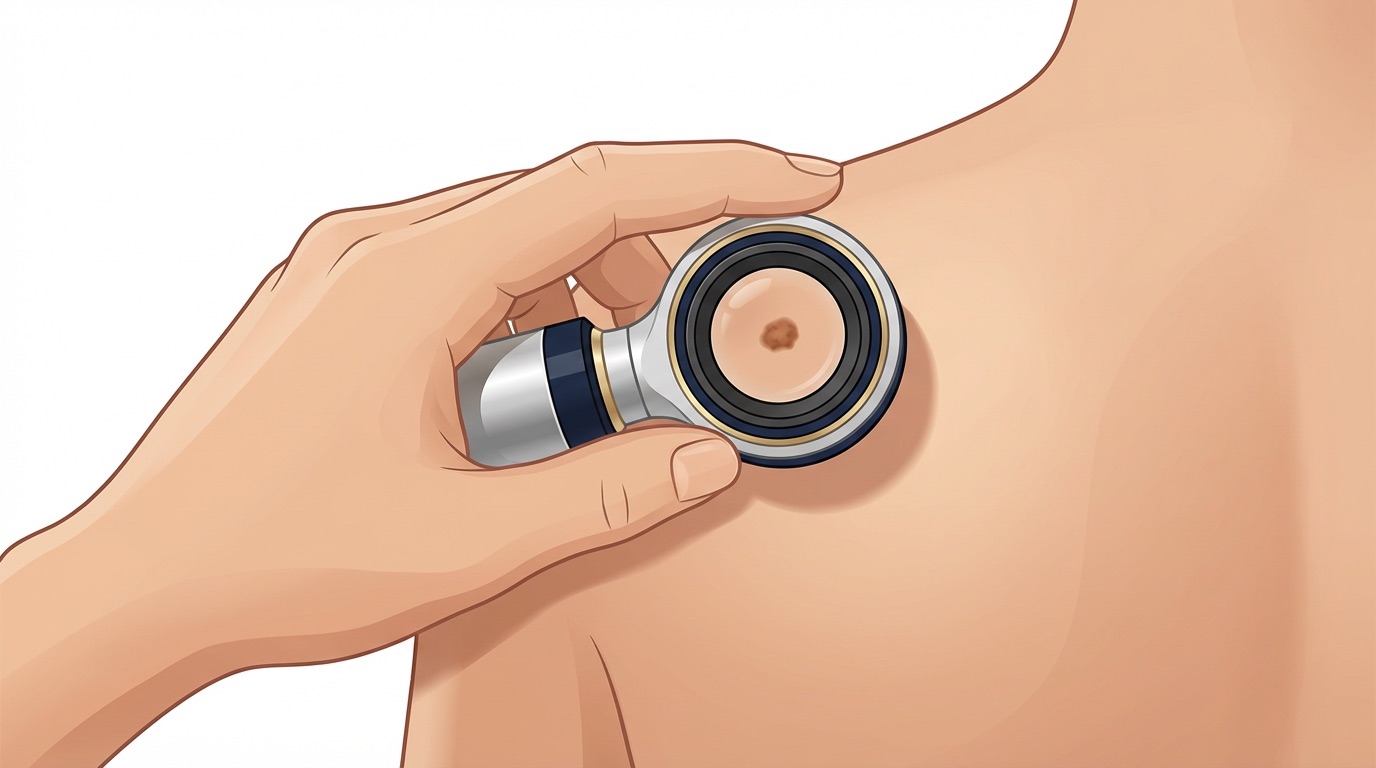
The other half of prevention is knowing your own skin. Check it regularly using the ABCDE rule, and take anything new, changing or simply odd seriously. If you would like a professional eye, a specialist mole and skin check offers a thorough, unhurried examination of your skin from head to toe, and our skin cancer centre pages explain how any concern is investigated and treated. For a closer look at what shapes individual risk, our article on melanoma risk factors and prevention is a natural companion to this one.