Actinic keratoses are one of the most common reasons people are referred to a skin specialist — and one of the most misunderstood. These rough, scaly patches are a record of sun exposure accumulated over a lifetime, and while the great majority are harmless, they sit in an important grey zone between healthy skin and skin cancer. Understanding what they are, why they appear and when they need treatment takes much of the worry out of a very common diagnosis.
What is an actinic keratosis?
An actinic keratosis (AK), sometimes called a solar keratosis, is a patch of skin that has been damaged by long-term exposure to ultraviolet (UV) radiation from the sun or from sunbeds. The cells in the outer layer of the skin grow abnormally, producing a rough, scaly area. Actinic keratoses are described as "pre-malignant" or "precancerous" — meaning they are not themselves cancer, but a small proportion can, over time, develop into a type of skin cancer called squamous cell carcinoma (SCC).
What does it look and feel like?
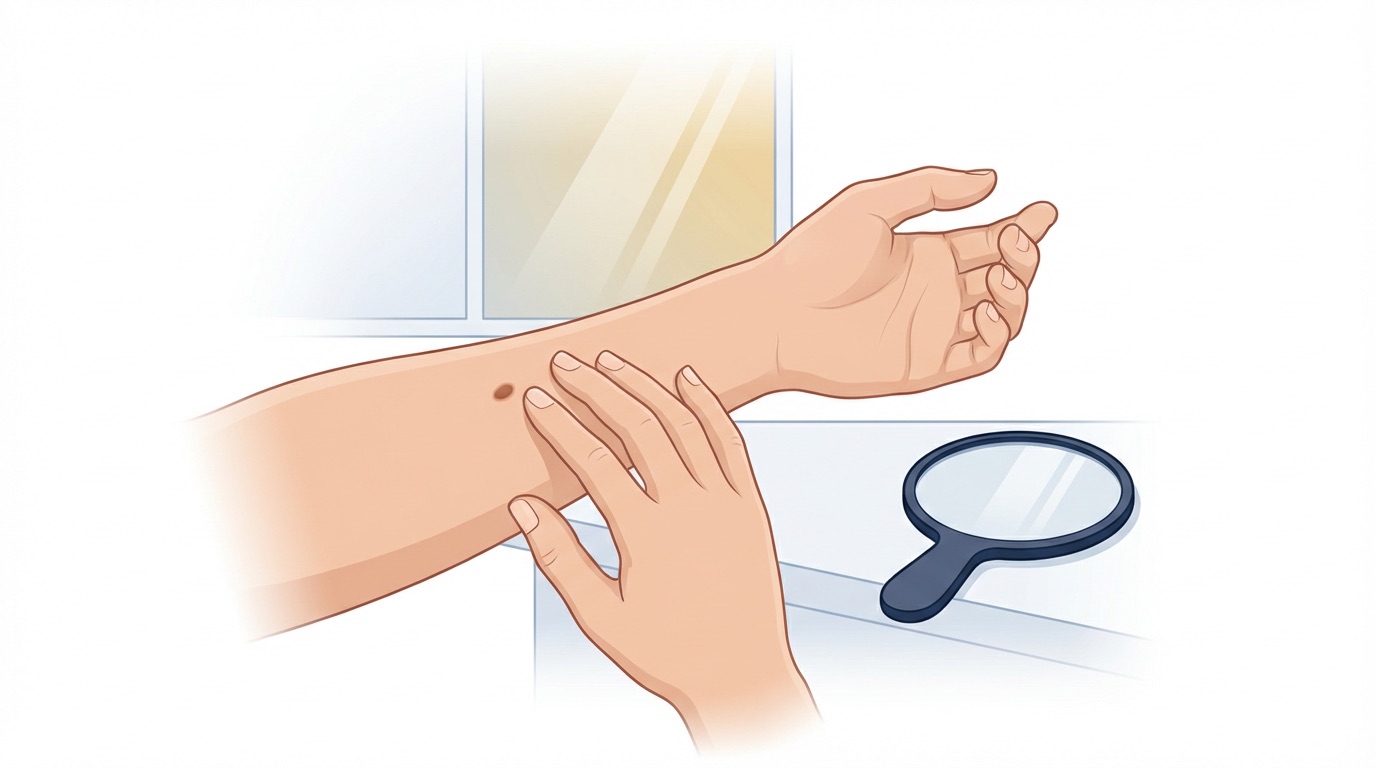
Actinic keratoses typically appear on the areas most exposed to the sun over the years: the face, the scalp (particularly in balding men), the ears, the neck, the backs of the hands and the forearms. They are often easier to feel than to see — a persistent rough, dry, sandpaper-like patch, sometimes only a few millimetres across. The colour ranges from skin-toned to pink, red or brownish, and the surface may be flaky or crusted. Some become raised, with a thicker, wart-like surface. They are usually painless, although they can occasionally itch or feel slightly tender.
A characteristic feature is that they can come and go — flaking away and then returning in the same spot — and that they persist over months rather than healing as a simple graze or dry patch would.
Why actinic keratoses matter
The significance of actinic keratoses lies both in what they represent and in what a small number can become. The risk of any single actinic keratosis turning into an invasive squamous cell carcinoma in a given year is low. However, most people who have one actinic keratosis have several, so the risk accumulates across all of them and over time.
Just as importantly, the presence of multiple actinic keratoses is a marker of significant sun damage across a whole region of skin — a concept doctors call "field change" or field cancerisation. It tells us that the surrounding skin has also been damaged and carries a higher background risk of developing skin cancers. This is why actinic keratoses are taken seriously, monitored, and frequently treated rather than simply ignored.
Who is most at risk?
Several factors increase the likelihood of developing actinic keratoses:
- Fair skin that burns easily and tans poorly
- Cumulative sun exposure or sunbed use — through outdoor work, sport, gardening or sunny holidays over many years
- Increasing age, as the damage builds up over decades
- Living, or having lived, in sunny climates
- A weakened immune system — actinic keratoses are particularly common, more numerous and more likely to progress in people taking immunosuppressant medication, such as organ transplant recipients. This group warrants closer surveillance.
How actinic keratosis is diagnosed
In most cases, an actinic keratosis can be diagnosed by an experienced clinician on examination alone, often aided by a dermatoscope — a specialised magnifying device that allows the skin's surface and pigment patterns to be examined in detail. Where there is any doubt — for example if a lesion is thickened, growing, tender, or has not responded to treatment — a small skin biopsy may be taken to confirm the diagnosis and to rule out an early squamous cell carcinoma.
Treatment options
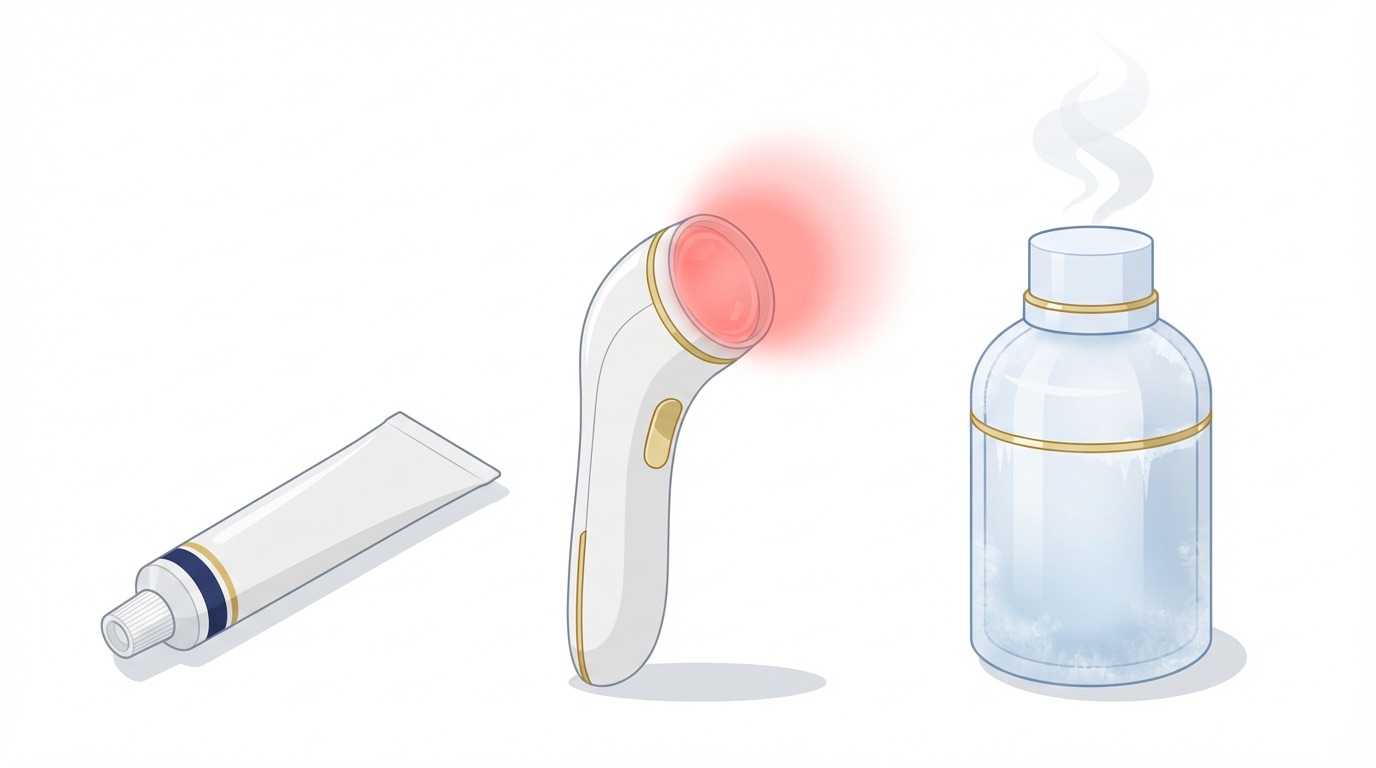
Treatment depends on the number of lesions, where they are, how thick they are and your general health. Broadly, treatments fall into two groups: those that target an individual lesion, and "field" treatments that address a wider area of sun-damaged skin containing several lesions at once.
Cryotherapy (liquid nitrogen)
A quick, clinic-based treatment in which liquid nitrogen is applied briefly to freeze the lesion. The area blisters and crusts before falling away over a couple of weeks. It is well suited to individual, well-defined actinic keratoses and needs no anaesthetic. The application stings briefly rather than being painful.
Topical creams
Prescription creams are particularly useful for field change, where many lesions are spread across an area such as the scalp or forearms. 5-fluorouracil (5-FU, brand name Efudix) is a chemotherapy cream; imiquimod (Aldara) works by recruiting the immune system. Both are applied at home over a number of weeks and deliberately produce redness, crusting and soreness as they work — the inflammatory reaction is the sign the treatment is taking effect, not a side effect to be alarmed by.
Photodynamic therapy (PDT)
Photodynamic therapy (PDT) combines a light-sensitising cream with a specific wavelength of light to destroy abnormal cells. It is an excellent option for widespread actinic keratoses on the face and scalp, where the cosmetic result matters, and is usually given as one or two sessions.
Curettage
For a thicker or more stubborn lesion, the area can be numbed with local anaesthetic and the abnormal tissue gently scraped away (curettage), sometimes with light cautery. This has the advantage of providing a tissue sample for the laboratory where the diagnosis needs confirming.
When an actinic keratosis might be something more
Most actinic keratoses remain stable or respond well to treatment. Certain changes, however, raise the possibility that a lesion has progressed towards an early squamous cell carcinoma and should be assessed promptly:
- A lesion that becomes thickened, raised or lumpy
- Tenderness or pain in a previously painless patch
- Rapid growth
- Bleeding, ulceration or a sore that does not heal
- A lesion that fails to clear after appropriate treatment
If you notice any of these features — in a known actinic keratosis or in a new patch of skin — it is worth seeking a specialist opinion rather than waiting.
"An actinic keratosis is the skin keeping a record of every summer. Most never cause harm — but they are a reminder to protect the skin you have, and to keep an eye on anything that changes."
Prevention: protecting sun-damaged skin
Because actinic keratoses are caused by cumulative UV exposure, sun protection is both treatment and prevention. Daily broad-spectrum sunscreen on exposed areas, protective clothing and hats, seeking shade during the strongest part of the day, and avoiding sunbeds altogether all reduce the chance of new lesions forming. Even after successful treatment, continuing to protect the skin lowers the likelihood of further actinic keratoses and of skin cancer developing in the same sun-damaged area.
Conclusion
An actinic keratosis diagnosis is common and rarely a cause for alarm — but it is a clear signal that the skin has had significant sun exposure and benefits from professional attention. The right approach depends on how many lesions there are, where they sit and your individual risk. If you have a rough, persistent patch of skin, or have been told you have actinic keratoses and would like them assessed and treated, you can arrange a specialist review through our Skin Cancer Centre. Our companion articles on non-surgical skin cancer treatments and on squamous cell carcinoma explore the related topics in more detail.