A cyst is rarely a serious problem, but it can be a persistent nuisance — catching on a comb or a collar, flaring up at inconvenient moments, or slowly enlarging somewhere you would rather it did not. Cyst removal is one of the most commonly performed minor operations, yet if you have never had surgery under local anaesthetic before, it is natural to want to know what actually happens: how much it hurts, how long it takes, what the scar will look like and when normal life resumes. This guide walks through each stage — before, during and after.
What is a cyst, and why do people have them removed?
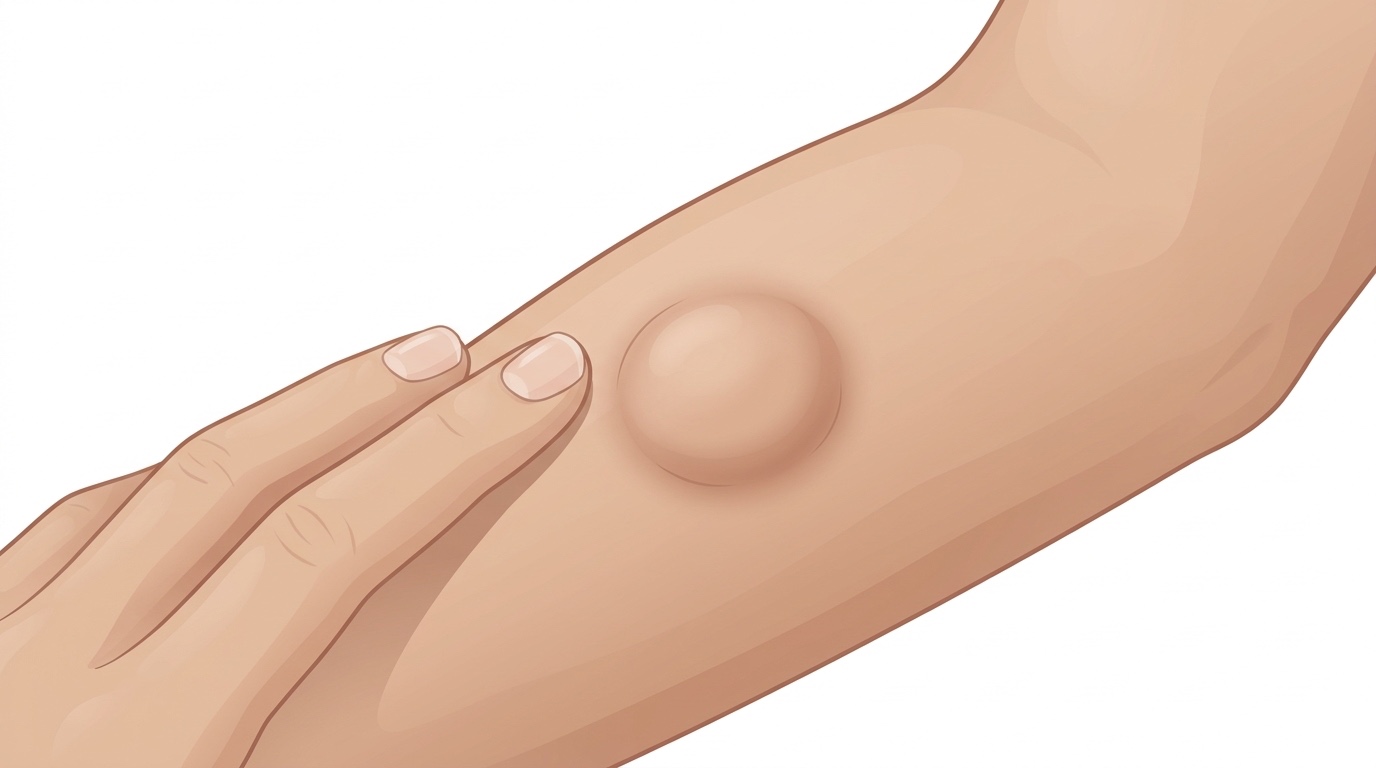
The lumps most people describe as cysts are epidermoid cysts, commonly known as sebaceous cysts. They form when skin cells and the protein keratin become trapped beneath the surface and build up inside a sac, producing a smooth, round, firm lump that moves with the skin, often with a small dark dot — the punctum — marking where the cyst connects to the surface. They are benign, and appear most often on the scalp, face, neck, chest and back.
No cyst has to be removed, and plenty are reasonably left alone. The common reasons patients choose surgery are practical: the cyst has become inflamed or infected, sometimes repeatedly; it intermittently leaks an unpleasant discharge; it is steadily growing; or it sits somewhere visible and has simply become a cosmetic nuisance. Once a cyst has flared up, further episodes tend to follow, which is why many people opt for removal after a first bout of inflammation.
Before surgery: the consultation, and why timing matters
The first step is a consultation, at which Mr Singh will examine the lump to confirm that it looks and behaves like a cyst, talk through why you want it removed, and explain what the procedure involves, including where the scar will sit and how it is likely to look once healed. For a typical cyst no scans are needed, and surgery can usually be arranged promptly.
One point of timing is worth emphasising: an inflamed or infected cyst is best settled before it is removed. Operating through red, swollen, fragile tissue makes the sac harder to remove completely, increases the chance of wound problems and tends to leave a poorer scar. If your cyst is actively inflamed, the usual approach is a course of antibiotics — or, where an abscess has formed, a small drainage procedure — followed by formal excision a few weeks later once everything has calmed down. Waiting can feel frustrating, but it improves the final result and reduces the chance of the cyst returning.
On the day: the procedure itself
Cyst removal is a local anaesthetic day case. You walk in awake, the area is numbed, and most procedures take roughly 20 to 40 minutes depending on the size and site of the cyst. The only uncomfortable moment is the local anaesthetic injection, which stings for a few seconds; once the area is numb, the operation is painless — you may be aware of pressure and movement, but nothing sharp.
Mr Singh removes the cyst through a small ellipse of skin that includes the punctum, then carefully frees the sac from the surrounding tissue — ideally lifting it out intact. Taking the complete sac, rather than simply emptying its contents, matters: any wall left behind can slowly refill, which is how cysts come back. The wound is then closed with either dissolving stitches or fine removable ones, a small dressing is applied, and you can go home shortly afterwards.
"The question I am asked most often is whether it hurts. In truth, the sting of the anaesthetic lasts a few seconds, and after that most patients chat away quite happily through the whole procedure. My focus is on removing the sac completely the first time, and on leaving the neatest scar the site will allow."
Why the cyst is sent for analysis
Whatever is removed at surgery is routinely sent to a histopathology laboratory for analysis under the microscope. This is standard good practice for any tissue removed from the body, not a sign of concern. In the great majority of cases the report simply confirms a benign epidermoid cyst; very occasionally it identifies something unexpected, which is precisely why the check is done. The result is shared with you at follow-up or in writing once it is available.
Recovery: week by week
Recovery after cyst removal is generally quick and undramatic. As a rough guide:
- The first 48 hours: keep the dressing clean and dry. Any discomfort is usually a mild ache, well controlled with simple painkillers such as paracetamol.
- Days two to seven: after the first 48 hours you can usually wash and shower normally, patting the area dry. Most people are back at desk work the same or next day.
- Suture removal: removable stitches typically come out at around five to seven days on the face and ten to fourteen days on the body or back. Dissolving stitches disappear on their own over the following weeks.
- The first two weeks: avoid stretching the wound and hold off strenuous exercise — the gym, swimming, heavy lifting — for roughly two weeks, particularly for wounds on the back or shoulders where the skin is under tension.
- Beyond two weeks: normal activity resumes, and attention turns to caring for the scar as it matures.
The scar: what to realistically expect
Every operation that goes through the skin leaves a scar, and it is fair to be honest about that from the outset. What you can expect is a fine line, usually a little longer than the cyst itself, placed wherever possible along the natural lines of the skin so that it settles discreetly. At first the scar will be pink or red and slightly firm; over the following 12 to 18 months it gradually softens, flattens and fades. Scars on the face generally mature beautifully, while those on the back and chest can stretch and take longer to settle — something Mr Singh will discuss beforehand where it applies.
You can help: once the wound has fully healed, massaging the scar with silicone gel encourages it to soften and flatten, and protecting it from the sun with high-factor sunscreen during its first year helps prevent permanent darkening.
Risks — and will it come back?
Cyst removal is a safe, minor procedure, but no operation is entirely without risk. Some bruising and swelling around the wound is common and settles within days. There is a small risk of infection, usually easily treated if it occurs. There will be a visible scar, as described above. And there is a low chance of recurrence: uncommon when the whole cyst wall has been removed, but more likely where the cyst has previously been infected or where earlier treatment removed it incompletely. If a cyst does return, it can be removed again.
Conclusion
For a lump that may have been an irritation for years, cyst removal is a short, comfortable procedure with a quick recovery and a low chance of the problem returning. If you are considering it, you can read more about how Mr Singh approaches the operation on our cyst removal page, or explore the wider range of benign skin lesion removal he offers. Practical details about consultation costs and private medical insurance are set out on our fees and insurance page.
And if you are not yet certain that your lump is a cyst at all, our guide to lumps under the skin explains how cysts, lipomas and other common lumps differ — and which features genuinely warrant a specialist review.