Sebaceous Cyst Removal
Sebaceous or epidermoid cysts are common, benign, slow-growing lumps that develop just beneath the surface of the skin. Whilst harmless, they can become unsightly, tender or repeatedly inflamed and infected, and surgical removal offers a definitive solution by excising the entire cyst including its wall.
Overview
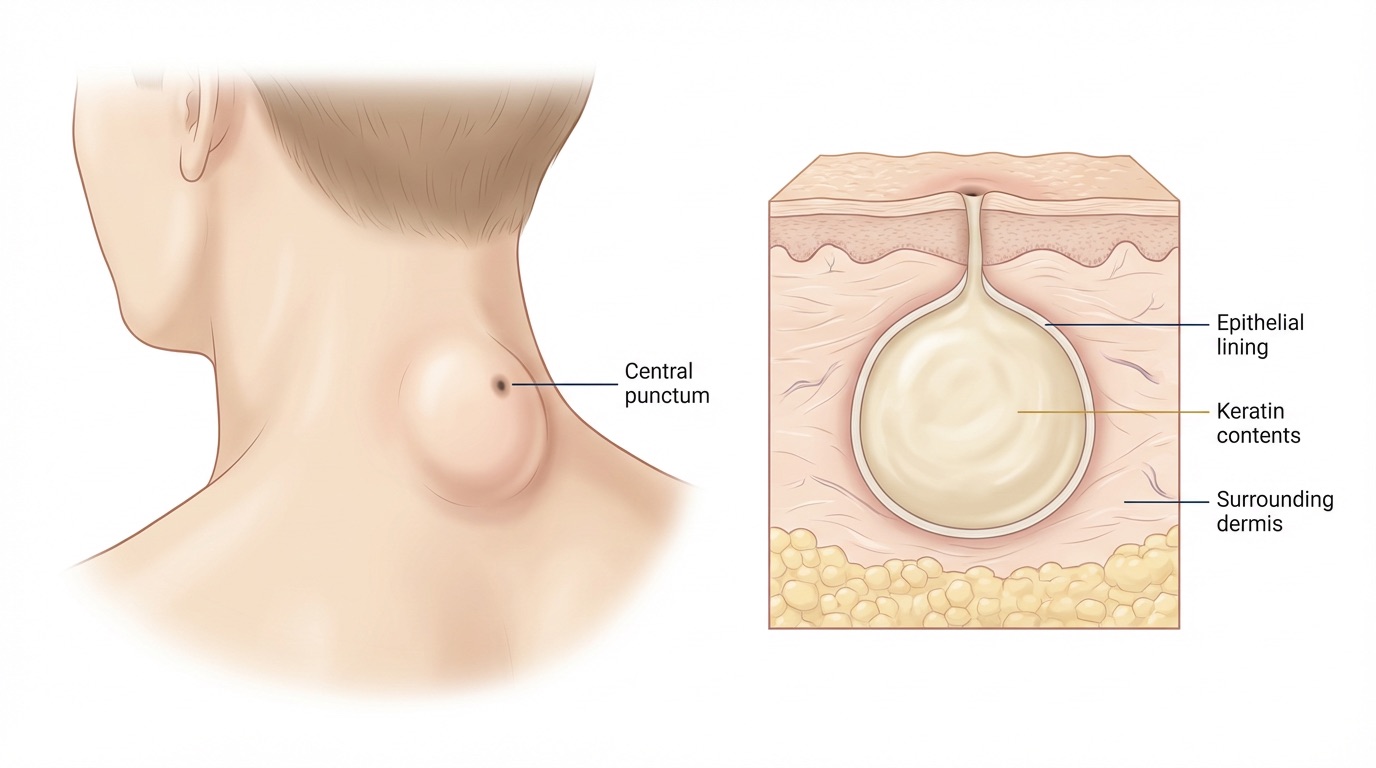
Skin cysts are fluid- or keratin-filled sacs lined by a thin membrane (the cyst wall). Although commonly called sebaceous cysts, most are in fact epidermoid or pilar cysts, formed when surface skin cells migrate inwards and continue to produce keratin within a closed cavity. They typically present as a round, firm lump just beneath the skin, often with a small central punctum.
Cysts can remain stable for years or gradually enlarge. They frequently become inflamed or infected, resulting in redness, pain, swelling and sometimes the discharge of cheesy, malodorous material. Complete surgical excision of the cyst and its lining is the most effective way to prevent recurrence and can be performed as a simple day-case procedure under local anaesthetic.
Benefits
- Definitive removal: Excising the entire cyst wall offers the best chance of permanent resolution and reduces the likelihood of recurrence.
- Prevention of infection: Removing the cyst eliminates the recurrent cycle of inflammation, infection and discharge that many patients experience.
- Cosmetic improvement: Elimination of a visible lump from the face, scalp, neck, back or other areas can significantly improve appearance.
- Symptom relief: Removes discomfort caused by cysts that are tender, pressing on nearby structures or catching on clothing.
- Histological confirmation: The specimen is sent for examination to confirm the diagnosis and exclude any unexpected pathology.
- Quick recovery: Performed as a day case under local anaesthetic with minimal downtime.
Surgical Techniques
The approach is tailored to the size, position and condition of the cyst. The goal in every case is to remove the entire cyst wall intact, as leaving any remnant behind increases the risk of recurrence.
- Local anaesthetic: Local anaesthetic is infiltrated around the cyst; you may feel a brief stinging sensation as the anaesthetic goes in, after which the area is numb and the procedure itself should be comfortable. Mr Singh will wait for the anaesthetic to take full effect before starting.
- Elliptical excision: A small ellipse of skin including the central punctum is marked and removed with the cyst beneath. This ensures the adherent overlying skin is excised with the specimen.
- Careful dissection: The cyst is gently dissected from the surrounding tissue, aiming to deliver it intact without rupturing the wall.
- Management of infected cysts: If the cyst is acutely infected, drainage and antibiotics are usually required first, with formal excision deferred for several weeks until the inflammation has settled.
- Closure: The wound is closed in layers with dissolvable deep sutures and fine skin sutures to give the best cosmetic result.
Risks & Considerations
General Risks
- Infection: A small risk of post-operative wound infection which may require antibiotics.
- Bleeding and bruising: Minor bleeding and bruising are common and usually settle within a few days.
- Scarring: Every excision leaves a scar; the final appearance is influenced by wound location, skin type and individual healing.
- Delayed healing: Particularly in areas with increased tension such as the back and shoulders.
Specific Risks to Cyst Surgery
- Recurrence: If any portion of the cyst wall is left behind the cyst can reform, requiring further surgery.
- Cyst rupture: The cyst may rupture during dissection, spilling its contents into the wound and potentially increasing the risk of recurrence or inflammation.
- Haematoma or seroma: A collection of blood or fluid can form in the cavity left behind after excision of a larger cyst.
- Wound dehiscence: Occasionally the wound edges can separate, particularly in areas of tension, and may need further dressings or re-suturing.
- Damage to surrounding structures: Rarely, small nerves or blood vessels adjacent to the cyst may be injured during dissection.
- Hypertrophic or keloid scarring: Some patients are prone to thickened or raised scars, particularly over the chest, shoulders, upper back and earlobes.
Recovery
Wound Care
- Dressings: A simple adhesive dressing is usually applied and is robust enough to survive gentle showering thereafter.
- Cleaning: Wash the wound gently with mild soap and water and pat it dry; avoid soaking in baths, pools or the sea until the wound is fully healed.
- Sutures: Non-absorbable sutures are removed between 7 and 14 days depending on the site; facial sutures come out earlier and those on the trunk later.
- Activity: Most day-to-day activities can be resumed immediately, but heavy lifting, vigorous exercise and contact sports should be avoided for 1 to 2 weeks.
Scar Advice
- Scar Care Products: Silicone gels or sheets and regular moisturising can help to optimise the final scar appearance.
- Sun Protection: Protect the scar from sun exposure for the first 6–8 weeks to minimise pigmentation changes.
- Massage: Once the wound is fully healed, gentle scar massage can help to soften and flatten the scar.
Follow-Up
- Initial Post-Op Visit: A short review appointment is arranged for suture removal where non-absorbable sutures have been used.
- Histology Review: The specimen is routinely sent for histological examination and the result is usually available within 2 weeks.
- Scar Check: A review at around 3 months is offered to inspect the scar and address any concerns.
- Long-Term Care: Mr Singh remains available should you develop any further cysts or require additional advice.
Procedure Summary
Ready to Discuss Cyst Removal?
If you have a cyst you would like assessed or removed, please feel free to contact us to answer any questions you may have or to schedule a consultation with Mr Singh.
Book a Consultation