Almost everyone has moles, and most never cause a moment’s trouble. Yet questions about removing them come up in clinic nearly every week — sometimes because a mole has become a nuisance, sometimes because someone has quietly disliked one for years, and sometimes because a mole has changed and needs a closer look. Whatever brings you to the question, the decisions that follow are the same: which technique suits the mole, what mark it will leave behind, and how to make sure nothing important is missed along the way. This guide walks through each of those questions in turn.
Why people have moles removed
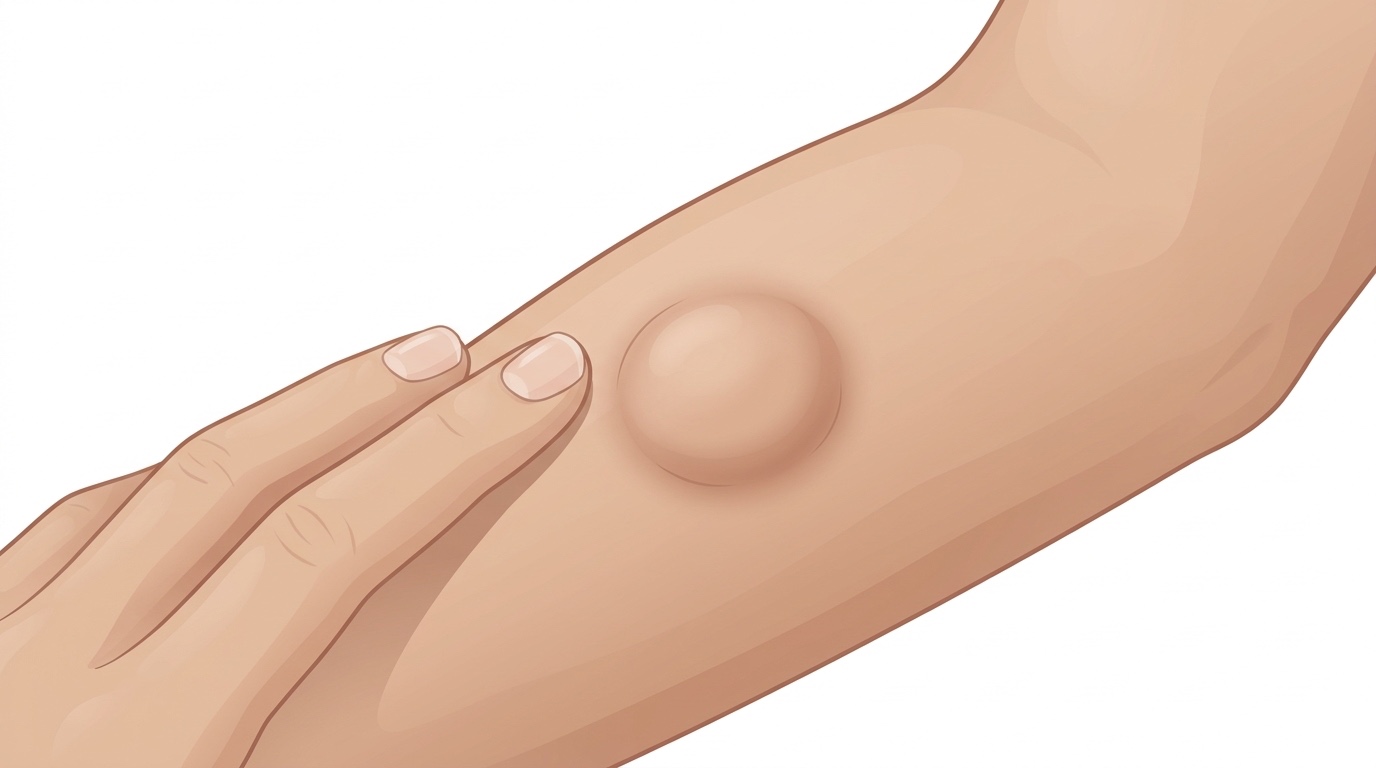
Broadly, there are three reasons. The first is cosmetic: a prominent mole on the face or neck that its owner has simply never liked. The second is practical: raised moles catch on razors, hairbrushes, necklaces and bra straps, and can become sore or inflamed when repeatedly nicked. The third — and the most important — is medical: a mole that has changed in size, shape or colour, or that stands out from its neighbours, may need to be removed so that it can be properly analysed. All three are legitimate reasons to seek an opinion; they simply lead to different conversations about technique and timing.
The first step: proper assessment before anything is removed
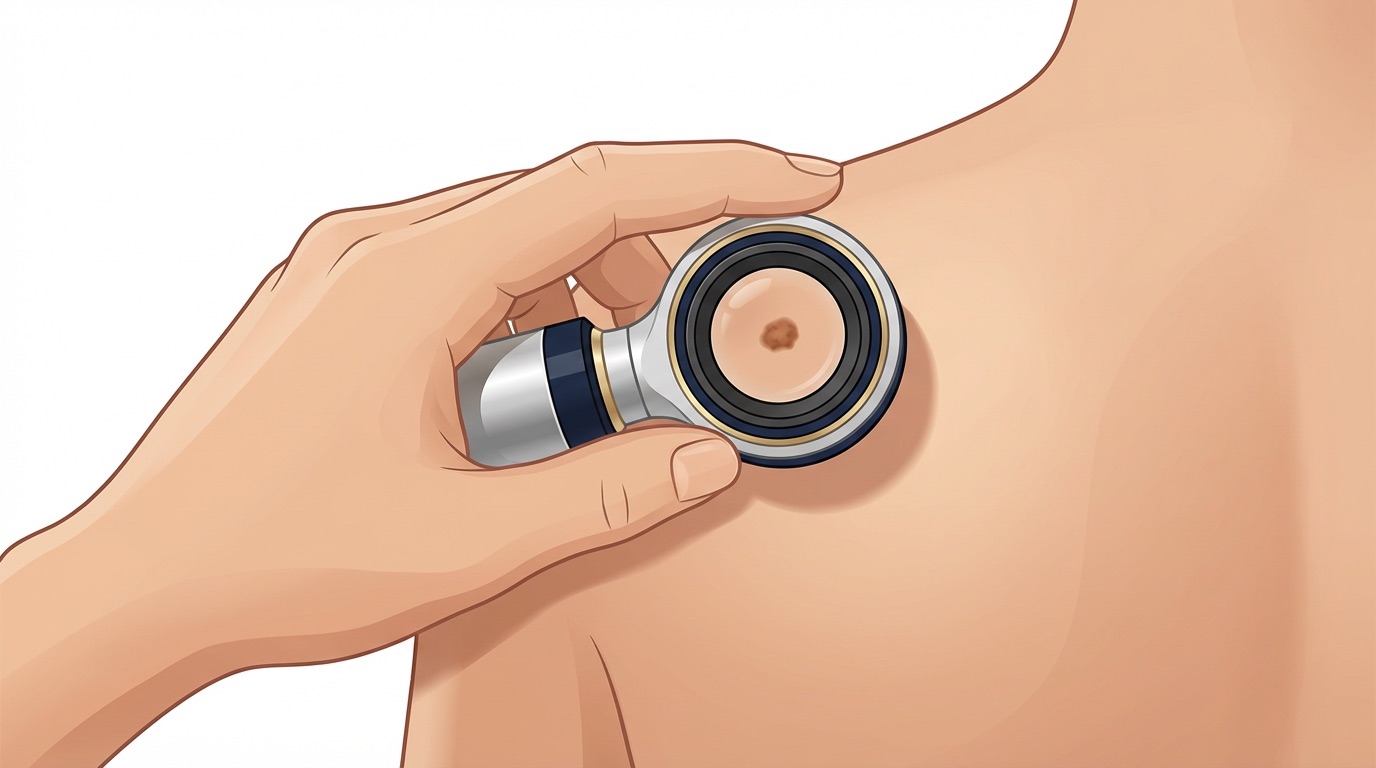
Before any mole is removed, it should be examined properly. In my practice, every mole is assessed with a dermatoscope — a polarised magnifying instrument that reveals structures and patterns within the pigment that the naked eye cannot see. Dermoscopy allows a benign mole to be confirmed as benign with far greater confidence, and it identifies the occasional mole that deserves more caution than its appearance at arm’s length would suggest. That assessment shapes everything that follows: a clearly benign, raised mole opens up the simplest options, while any atypical feature changes the plan entirely.
Shave excision: the simplest option for raised, benign moles
For a raised mole that dermoscopy has confirmed as benign, a shave excision is often the neatest solution. Under local anaesthetic, the mole is shaved flush with the surrounding skin using a fine blade. No stitches are needed. The small raw area heals rather like a graze over one to two weeks, and typically leaves a flat, pale mark roughly the size of the original mole. For a dome-shaped mole on the face this is often an excellent trade: the bump goes, leaving a subtle, flat area that usually blends well.
There are two honest caveats. Because the mole is removed at the level of the surrounding skin, deeper mole cells inevitably remain, so a shaved mole can partially regrow or re-pigment over time — not dangerous in a confirmed benign mole, but worth knowing before you choose. And because a shave does not remove the full depth of the lesion, it is not an appropriate technique for any mole with suspicious features. Those need formal excision.
Full-thickness excision: removing the mole completely
A full-thickness excision removes the mole in its entirety, roots and all. An ellipse of skin containing the mole is removed, and the edges are brought together with fine sutures. Because an ellipse has to be longer than it is wide in order to close flat, the resulting scar is a fine line usually two to three times the diameter of the original mole. That sounds significant, but a well-planned linear scar, aligned with the skin’s natural tension lines, generally fades over twelve to eighteen months into a slim, pale line less noticeable than most patients expect. Full excision is the right choice for flat moles, for any mole where doubt exists, and for anyone who values the certainty of knowing the whole lesion has gone.
Histology — and why laser removal is not recommended
Whichever technique is used, every mole I remove is sent for histological analysis — examination under the microscope by a pathologist. For a clearly benign mole this almost always simply confirms what dermoscopy has already shown, but it is a safety standard I do not compromise on, because it means nothing is ever assumed.
It is also the central reason I do not recommend laser treatment — or any form of “burning off” — for pigmented moles. Laser destroys the tissue, so there is nothing left to analyse and no way to confirm what the mole actually was. Worse, partial destruction of a pigmented lesion can mask changes and make future assessment of that area of skin more difficult. A treatment that removes the evidence along with the mole is not a shortcut worth taking.
What removal is like on the day — and afterwards
Mole removal is a day-case procedure performed under local anaesthetic, typically taking between fifteen and thirty minutes. The anaesthetic injection stings briefly; after that, the procedure itself is painless, and most people are back to normal activities the same day. Aftercare is simple:
- Dressing: a small dressing stays in place, kept dry, for the first 48 hours.
- Stitches: where sutures are used, they are removed between five and fourteen days after the procedure depending on the site — sooner on the face, later on the back and limbs.
- Healing: a shave site heals like a graze over one to two weeks, while an excision line settles progressively over the following months.
- Sun protection: a new scar should be protected from the sun with high-factor sunscreen while it matures, as sun exposure can darken it and make it more noticeable.
Honest expectations: how scars behave in different places
No technique removes a mole without leaving some mark, and where the mole sits matters as much as how it is removed. The face, with its excellent blood supply and fine skin, generally heals remarkably well — facial scars often fade to the point where they take genuine effort to find. The chest, shoulders and upper back are the most scar-prone areas of the body: skin there is thicker and under constant movement and tension, so scars are more likely to stretch or to become raised and thickened. That does not mean moles in these areas should not be removed — many are, with good results — but the conversation beforehand should be honest, so that the decision is made with realistic expectations rather than optimistic ones.
“No surgeon can remove a mole without leaving some mark, and anyone promising a scarless removal is overpromising. What we can do is choose the right technique for the right mole, place the scar thoughtfully, and give it every chance of fading to something you rarely notice.”
When a mole should be removed urgently, not cosmetically
One distinction matters above all others. A mole that is changing — growing, darkening, developing an irregular edge or a mix of colours, itching, crusting or bleeding — is not a cosmetic problem and should not be treated as one. A mole with genuinely suspicious features is excised completely, with a margin of normal skin around it, and handled on an urgent pathway with the histology prioritised. Shave excision and laser have no place here. Most changing moles still turn out to be benign, but the few that do not are exactly the ones where prompt, complete removal matters most. If a mole of yours has changed, seek review promptly.
Conclusion
Mole removal is a small procedure, but a considered one: the right technique, chosen after proper dermoscopic assessment, with every specimen analysed and an honest conversation about the mark it will leave. If you are unsure whether a mole needs attention at all, a formal mole and skin check is the sensible place to start — it answers the medical question first, so any cosmetic decision can be made with confidence.
For moles and other harmless spots being removed for comfort or confidence, you can read more about benign skin lesion removal and what it involves. And if what prompted your reading is a mole that has changed, our guide on when to worry about a mole covers the specific features that warrant prompt specialist review.