Tummy Tuck (Abdominoplasty)
Also known as abdominoplasty, a tummy tuck is a transformative procedure that removes excess skin and fat from the abdomen whilst tightening the underlying abdominal muscles, creating a firmer, flatter and more contoured midsection.
Overview
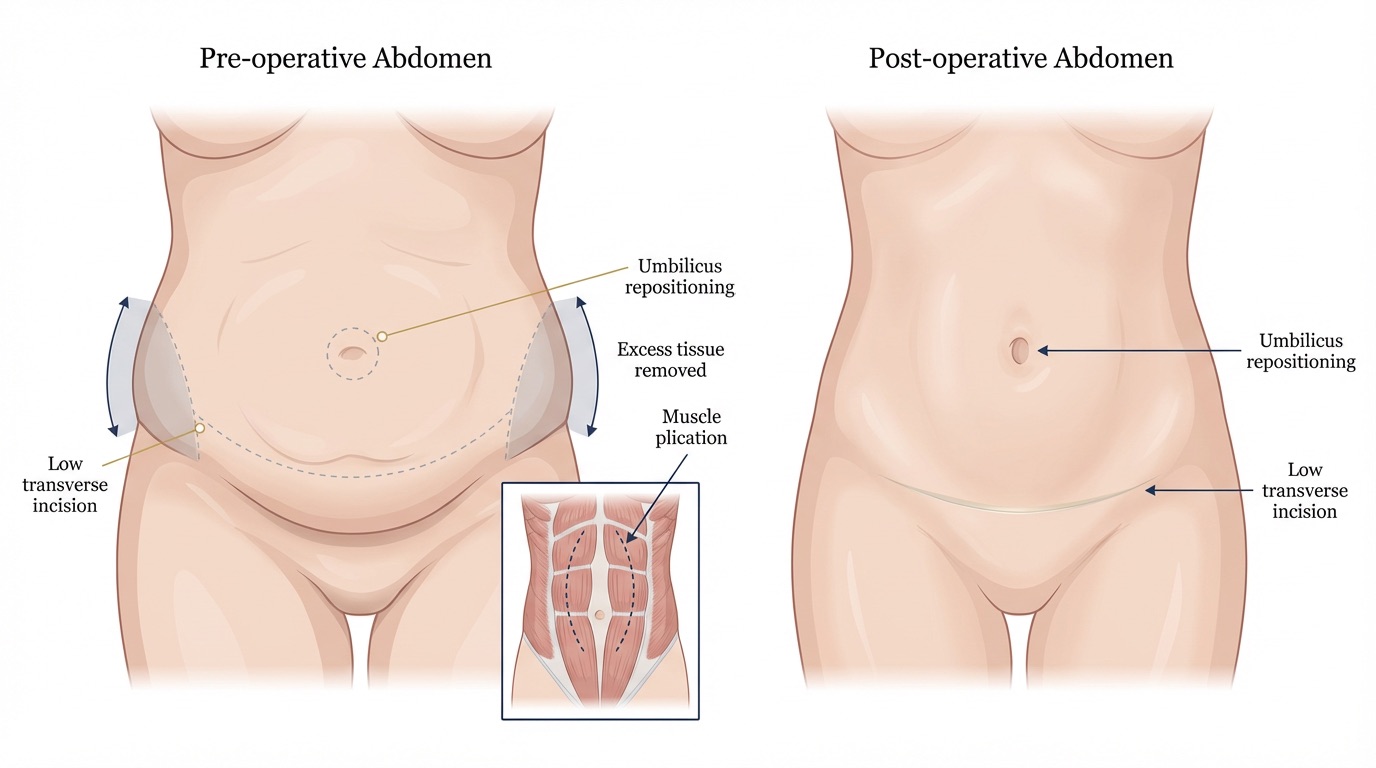
A tummy tuck, or abdominoplasty, is a surgical procedure designed to remove excess skin and fat from the abdomen and to tighten the underlying abdominal wall muscles. This is particularly effective for patients who have loose, hanging skin following pregnancy, significant weight loss or as a consequence of ageing, where diet and exercise alone are unable to achieve the desired result.
During pregnancy or with weight gain, the rectus abdominis muscles at the front of the abdomen can separate (a condition known as rectus diastasis), leaving the belly looking distended even after weight loss. Abdominoplasty addresses both the muscle separation and the loose overlying skin to restore a firmer, flatter abdominal contour.
Benefits
- Flatter, firmer abdomen: Removal of loose, hanging skin and stubborn fat to create a smoother, tighter abdominal contour.
- Repair of muscle separation: Tightening of separated rectus abdominis muscles (rectus diastasis), restoring core strength and a flatter profile.
- Improved posture and core support: A repaired abdominal wall often helps to improve posture and can reduce associated lower back discomfort.
- Removal of stretch marks: Stretch marks located on the lower abdomen are typically removed along with the excised skin.
- Resolution of skin irritation: Elimination of rashes, chafing and hygiene difficulties associated with an overhanging apron of skin.
- Boosted confidence: A more proportionate and contoured midsection, making clothing fit better and improving overall self-image.
Surgical Techniques
A full abdominoplasty is performed under general anaesthetic and usually takes three to four hours. The technique is tailored to the amount of excess skin, the degree of muscle separation and your individual anatomy. Mr Singh will discuss the most appropriate approach for you during your consultation.
- Low horizontal incision: A long incision is made low on the abdomen, typically hip-to-hip, sitting below the bikini line so that any scar can be concealed by underwear or swimwear.
- Umbilical incision: A second small incision is made around the belly button so that it can be repositioned on the new, tighter abdominal wall.
- Skin and fat removal: The skin and underlying fat are lifted off the abdominal wall up towards the ribcage, and the excess lower abdominal tissue is removed.
- Rectus diastasis repair: The separated rectus abdominis muscles are brought back together in the midline with strong internal sutures, effectively creating an internal corset.
- Redraping and closure: The upper abdominal skin is redraped downwards over the tightened muscle and trimmed to fit, with the belly button brought out through a new opening. Incisions are closed in layers with dissolving sutures and drains are usually placed.
Risks & Considerations
General Risks
- Infection: Risk of wound infection which can delay healing and may require additional treatment with antibiotics.
- Bleeding: Risk of excessive bleeding during or after surgery. Collection of blood beneath the skin (a haematoma) can occasionally require a return trip to theatre.
- Scarring: A permanent long low horizontal scar and a scar around the belly button. Scars typically fade over time but will not disappear completely.
- Blood clots (DVT/PE): Any major body contouring surgery carries a risk of deep vein thrombosis and pulmonary embolism. Measures such as compression stockings, calf pumps and early mobilisation are used to reduce this risk.
- Anaesthetic risks: As with any surgery requiring general anaesthesia.
Specific Risks to Abdominoplasty
- Seroma: Collection of fluid beneath the skin flap, which may need to be drained in the clinic with a needle. This is one of the commoner complications following abdominoplasty.
- Changes in skin sensation: Numbness over the lower abdomen is common after surgery and usually improves over many months, although some patches of altered sensation can be permanent.
- Fat necrosis: Areas of fatty tissue can occasionally lose their blood supply and feel firm or lumpy under the skin. Most cases settle with time.
- Wound healing problems: Particularly at the centre of the long horizontal scar or around the belly button. Small areas of delayed healing usually settle with dressings.
- Umbilical issues: Rarely, the new belly button can lose its blood supply or heal with an irregular appearance that may require minor revision.
- Dog-ears: Small puckers of skin at the ends of the scar that may need minor correction under local anaesthetic.
Recovery
Compression Garments
- Abdominal binder or compression garment: A supportive garment is worn 24/7 for the first 4–6 weeks and then during the day for a further period, to reduce swelling, support the healing tissues and help the skin to redrape against the new contour.
- Posture: You will be asked to walk slightly bent forward at the waist during the first week or two to take tension off the wound. Do not try to stand completely upright too early.
Wound Care
- Dressings: Keep the dressings in place as directed. They are usually robust enough to allow showering.
- Drains: Surgical drains are usually placed and remain in until fluid output drops, typically around 1–2 days.
- Cleaning: Gentle daily showering is encouraged once you have been advised it is safe to do so; this helps reduce the risk of wound infection.
Scar Advice
- Scar care products: Silicone sheets or gels and moisturisers once wounds are sealed can help to minimise the appearance of scars.
- Sun protection: Protect the scar from sun exposure for the first 6–8 weeks with sunscreen or clothing to prevent pigmentation changes.
- Massage: Once wounds are fully healed, gentle scar massage can help to soften and flatten the scars.
Follow-Up
- Initial Post-Op Visit: Typically scheduled around a week following surgery for a wound check and drain review. Sutures are usually dissolving for this procedure.
- Subsequent Visits: Usually seen again 6 weeks following surgery for an early check and around the 3–4 month mark for a longer-term review of scar maturation and contour.
- Long-Term Care: Mr Singh remains available for any concerns or further follow-up as required.
Procedure Summary
Ready to Discuss Abdominoplasty?
If you are considering a tummy tuck, please feel free to contact us to answer any questions you may have or to schedule a consultation and learn more about how this procedure may benefit you.
Book a Consultation