Arm Lift (Brachioplasty)
Also known as brachioplasty, an arm lift is a surgical procedure that removes excess skin and stubborn fat from the upper arms to restore a smoother, firmer contour from the elbow to the armpit.
Overview
An arm lift, or brachioplasty, is a surgical procedure that removes excess skin and fat from the upper arm between the armpit and the elbow. It is particularly suited to patients who have been left with loose, hanging skin following significant weight loss or as a consequence of ageing, where the skin has lost its elasticity and cannot be tightened by exercise alone.
In some patients, the loose tissue is primarily fat and liposuction alone may be sufficient. When the skin has lost its ability to retract, however, only skin excision can give a true improvement in contour. Mr Singh will assess your arms carefully during consultation and recommend the most appropriate approach.
Benefits
- Firmer upper arms: Removal of the loose, hanging "bat-wing" skin that cannot be addressed with diet or exercise.
- Improved proportion: A smoother, more toned contour from the armpit to the elbow that is in better proportion with the rest of the body.
- Reduction of fat deposits: Liposuction can be performed at the same time to address stubborn pockets of upper-arm fat.
- Better clothing fit: Sleeves and tops fit more comfortably and flatteringly after surgery.
- Reduction in skin irritation: Elimination of chafing and rashes caused by redundant overhanging skin.
- Boosted confidence: Renewed confidence in wearing short-sleeved clothing and in the overall appearance of the arms.
Surgical Techniques
Brachioplasty is performed under general anaesthetic and typically takes between two and three hours. The exact technique is tailored to the extent and location of your skin excess, and Mr Singh will discuss the most appropriate approach with you during your consultation.
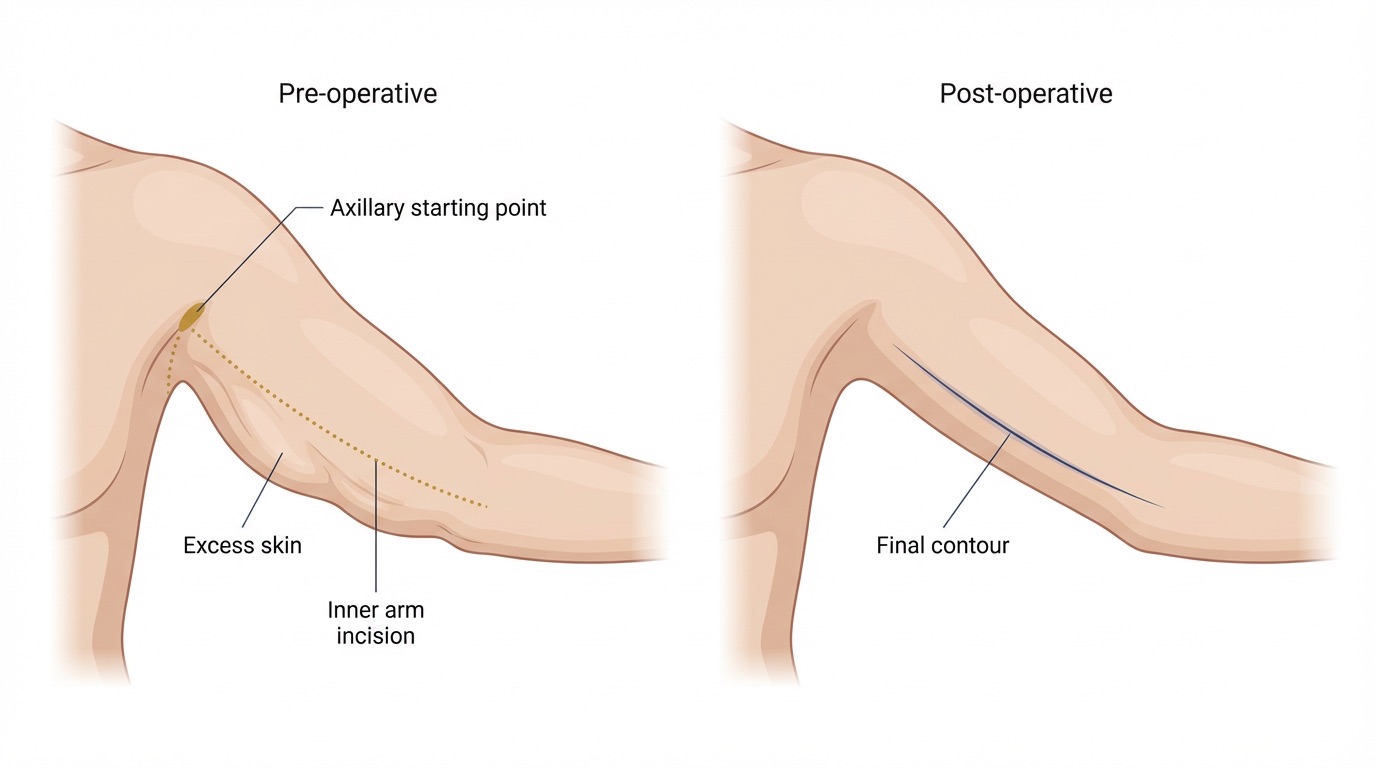
- Standard brachioplasty: An incision is made along the inner aspect of the upper arm, usually running from the armpit towards the elbow. The length and position are planned to sit where they can be best concealed.
- Mini brachioplasty: A shorter scar limited to the armpit area, suitable for patients with only mild skin excess close to the armpit.
- Extended brachioplasty: For patients with significant skin excess extending onto the chest wall following major weight loss, the incision may be extended beyond the armpit along the side of the chest.
- Liposuction: Liposuction of the upper arms is often performed at the same time to address deeper fatty tissue and improve the final contour.
- Tissue removal and closure: Excess skin and fat are removed and the remaining tissue is closed in layers with dissolving sutures, followed by dressings.
Risks & Considerations
General Risks
- Infection: Risk of wound infection which can delay healing and require additional treatment.
- Bleeding: Risk of excessive bleeding during or after surgery, with haematoma formation occasionally requiring a return to theatre.
- Scarring: A long scar along the inner aspect of the upper arm which is permanent. Scars typically fade but remain visible and can occasionally become raised or thickened.
- Blood clots (DVT/PE): Any surgery under general anaesthetic carries a small risk of deep vein thrombosis or pulmonary embolism.
- Anaesthetic risks: As with any surgery requiring general anaesthesia.
Specific Risks to Brachioplasty
- Visible scar: The scar along the inner arm is the most significant trade-off of brachioplasty and can be visible when the arms are raised.
- Seroma: Collection of fluid beneath the skin may require drainage in clinic with a needle.
- Altered sensation: Temporary or permanent numbness or altered sensation over the inner aspect of the upper arm.
- Nerve injury: A small risk of injury to nerves running close to the operative field, which can result in areas of numbness or, rarely, motor changes.
- Asymmetry: Small differences in the contour or length of the scars between the two arms.
- Wound healing problems: Small areas of delayed healing along the scar line or at the armpit, usually settling with dressings.
- Lymphoedema: Rarely, swelling of the hand or forearm from disturbance of superficial lymphatic channels, usually transient.
Recovery
Compression Garments
- Upper-arm compression sleeves: Supportive sleeves are worn 24/7 for 4–6 weeks to help reduce swelling and support the healing tissues.
- Arm elevation: Keep the arms gently elevated on pillows when resting during the first few days to minimise swelling and discomfort.
Wound Care
- Dressings: Keep surgical dressings in place as directed; these are usually robust enough to survive gentle showering.
- Drains: Surgical drains are usually placed and remain in until fluid output drops, typically around 1–2 days.
- Cleaning: Gentle daily showering with mild soap and water is encouraged once you have been advised it is safe, to reduce the risk of infection.
Scar Advice
- Scar care products: Silicone sheets, gels and moisturisers once wounds are fully sealed can help minimise scarring.
- Sun protection: Protect the scar from direct sun exposure for the first 6–8 weeks with sunscreen or clothing.
- Massage: Gentle scar massage once wounds are fully healed can help to soften and flatten the scar over time.
Follow-Up
- Initial Post-Op Visit: Typically scheduled around a week following surgery to check on wound healing. Sutures are usually dissolving for this procedure.
- Subsequent Visits: Usually seen again 6 weeks following surgery for an early check and around the 3–4 month mark for a longer-term review of the scars and contour.
- Long-Term Care: Mr Singh remains available for any concerns, scar management support or further follow-up as required.
Procedure Summary
Ready to Discuss an Arm Lift?
If you are considering brachioplasty, please feel free to contact us to answer any questions you may have or to schedule a consultation and learn more about how this procedure may benefit you.
Book a Consultation