Lipoma Removal
Lipomas are soft, benign lumps composed of mature fat cells that develop in the layer of tissue just beneath the skin. They are one of the most common soft-tissue lumps in adults and, although harmless, can cause discomfort, restrict movement or be cosmetically unwelcome. Surgical excision offers a reliable, one-step solution.
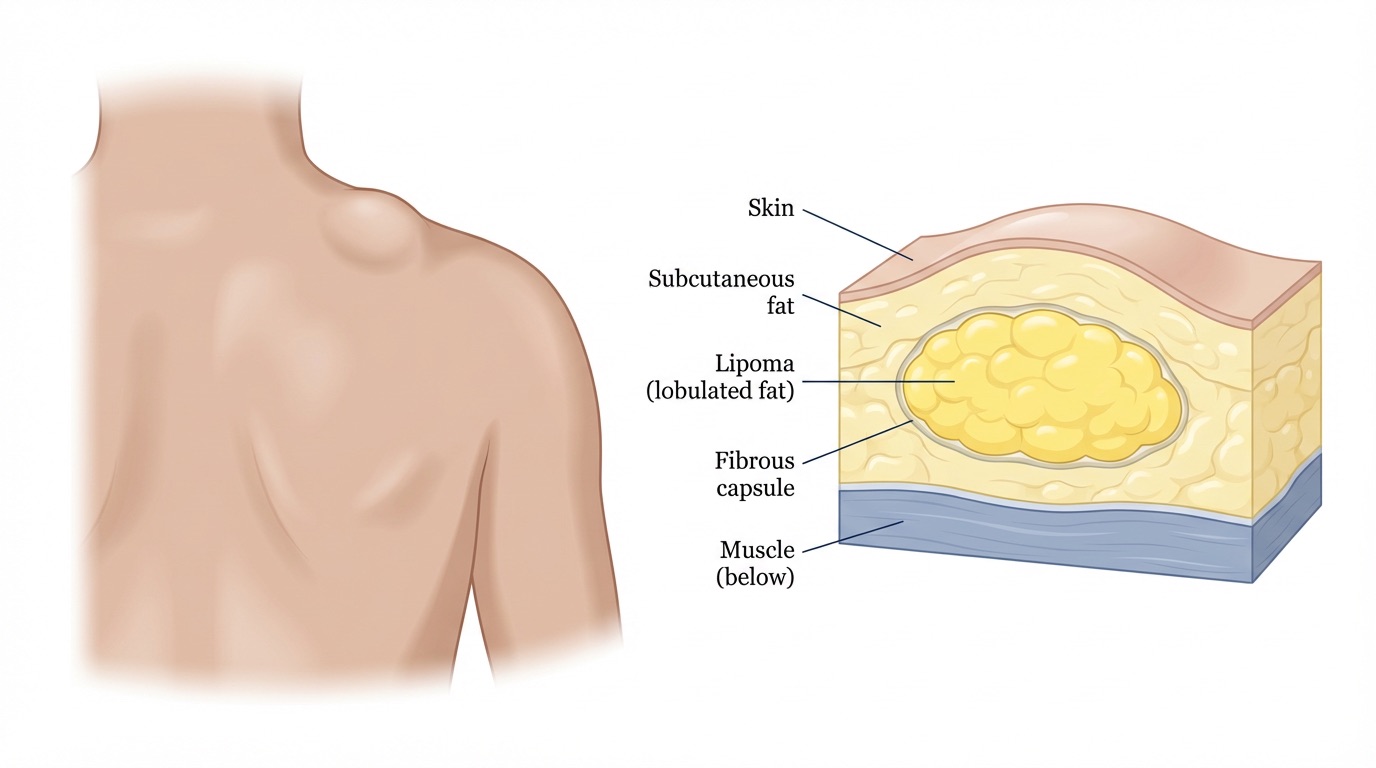
Overview
A lipoma is a benign tumour of mature fat cells enclosed within a thin capsule. Lipomas typically feel soft, rubbery and mobile beneath the skin, and most commonly appear on the trunk, shoulders, neck, arms and thighs. They usually grow slowly and can vary from a few millimetres to several centimetres across. Some patients develop multiple lipomas, a condition known as lipomatosis.
Although lipomas are not cancerous, they are often removed for cosmetic reasons, because they are growing, painful, in an awkward location, or to obtain a histological diagnosis. Mr Singh will assess the lipoma clinically and, where indicated, request imaging such as ultrasound or MRI prior to surgery for larger, deeper or atypical lesions.
Benefits
- Complete removal: Surgical excision removes the entire lipoma including its capsule, offering a low rate of recurrence at the same site.
- Symptom relief: Lipomas that are tender, compressing nearby structures or restricting movement can be particularly uncomfortable and excision provides definitive relief.
- Cosmetic improvement: Removal eliminates a visible or palpable lump, improving the contour of the affected area.
- Histological confirmation: The specimen is sent for examination to confirm the diagnosis and exclude uncommon mimics such as liposarcoma.
- Reassurance: Many patients seek removal for peace of mind, particularly when the lump is growing or changing in character.
- Minimal disruption: Most small and moderately sized lipomas are removed as a day case under local anaesthetic with rapid return to normal activity.
Surgical Techniques
The surgical approach depends on the size, depth and location of the lipoma, and on whether multiple lipomas are being removed during the same procedure.
- Local anaesthetic: Smaller, superficial lipomas are typically removed under local anaesthetic infiltrated into the overlying skin and around the lesion.
- General anaesthetic: Larger, deeper or multiple lipomas, and those in sensitive areas, may be more comfortably removed under general anaesthetic.
- Excision through a linear incision: An incision is made over the lipoma and the lump is carefully dissected from the surrounding tissue and delivered intact.
- Minimal-access technique: For selected lipomas, a small incision can be used to squeeze and tease the lipoma out, minimising the length of the scar.
- Haemostasis and closure: Any bleeding vessels are sealed and the resulting cavity closed in layers with absorbable sutures to eliminate dead space and reduce the risk of fluid collection.
- Dressing: A supportive dressing is applied; for larger cavities a compression bandage or light pressure dressing may be used to help the tissues settle down.
Risks & Considerations
General Risks
- Infection: A small risk of wound infection which may require antibiotics.
- Bleeding and bruising: Common and usually self-limiting; a larger collection of blood (haematoma) can occasionally form in the cavity.
- Scarring: A permanent scar is inevitable and its size will depend on the size of the lipoma and the surgical approach.
- Anaesthetic risks: Where general anaesthesia is used, standard anaesthetic risks apply.
Specific Risks to Lipoma Surgery
- Seroma: Fluid can collect in the cavity left by a large lipoma and may require aspiration on one or more occasions to settle.
- Nerve injury: Small cutaneous nerves adjacent to the lipoma may be stretched or divided, leading to a patch of altered sensation which is usually temporary but can occasionally be permanent.
- Recurrence: Rarely, a lipoma can recur locally if a small portion of the capsule is left behind; new lipomas can also appear elsewhere.
- Contour irregularity: A small dimple or depression can occasionally remain at the site of a large lipoma.
- Unexpected pathology: Very rarely, what appears clinically to be a lipoma is found on histology to be a more aggressive fatty tumour such as a liposarcoma, which may require further treatment.
- Hypertrophic or keloid scarring: Thickened, raised scars may develop particularly on the chest, shoulders and upper back.
Recovery
Wound Care
- Dressings: A simple adhesive dressing is usually applied and is robust enough to survive gentle showering thereafter.
- Cleaning: Clean the wound gently with mild soap and water; avoid prolonged soaking in baths, pools or the sea until the wound is fully healed.
- Sutures: Deep sutures are absorbable; any non-absorbable skin sutures are typically removed between 7 and 14 days depending on the site.
- Activity: Walking and light activities can be resumed immediately; heavy lifting, strenuous exercise and contact sports should be avoided for around 2 weeks to allow the cavity to heal without developing a seroma.
Scar Advice
- Scar Care Products: Silicone gels or sheets and regular moisturising can help to optimise the final appearance of the scar.
- Sun Protection: Protect the scar from direct sun exposure for the first 6–8 weeks to minimise pigmentation changes.
- Massage: Once fully healed, gentle scar massage can help soften and flatten the scar.
Follow-Up
- Initial Post-Op Visit: Typically scheduled around a week after surgery to check wound healing and remove non-absorbable sutures where needed.
- Histology Review: The specimen is routinely sent for histological examination and the result is usually available within 2 weeks.
- Scar Check: A review at around 3 months is offered to assess the scar and address any concerns.
- Long-Term Care: Mr Singh remains available for any concerns, new lumps or further advice as required.
Procedure Summary
Ready to Discuss Lipoma Removal?
If you have a lipoma or soft-tissue lump you would like assessed or removed, please feel free to contact us to answer any questions you may have or to schedule a consultation with Mr Singh.
Book a Consultation