Breast Reduction
Also known as reduction mammoplasty, breast reduction is a transformative procedure that removes excess breast tissue, fat and skin to achieve a size in proportion with your body and to alleviate the discomfort associated with overly large breasts.
Overview
Breast reduction, also known as reduction mammoplasty, is a surgical procedure aimed at removing excess breast fat, glandular tissue and skin to achieve a breast size in proportion with your body and to alleviate discomfort associated with overly large breasts. This procedure is tailored to each patient's needs and can significantly improve physical and emotional well-being.
Many patients seek breast reduction to relieve chronic neck, back and shoulder pain caused by the weight of their breasts, as well as to improve their ability to participate in physical activities and to achieve a more proportionate figure.
Benefits
- Alleviation of physical discomfort: Reduction in back, neck and shoulder pain caused by the weight of large breasts.
- Improved posture: Easing of strain on the back and shoulders can lead to better posture.
- Enhanced mobility: Greater ease in engaging in physical activities and exercise.
- Better proportion: Achieving a breast size more proportionate to your body.
- Boosted confidence: Improved self-image and confidence due to a more balanced figure and relief from physical discomfort.
- Skin condition improvement: Reduction in skin irritation, rashes and infections in the under-breast crease.
Surgical Techniques
The surgical approach is selected based on the size of your breasts, the amount of tissue to be removed and the desired outcome. Mr Singh will discuss the most appropriate technique for you during your consultation.
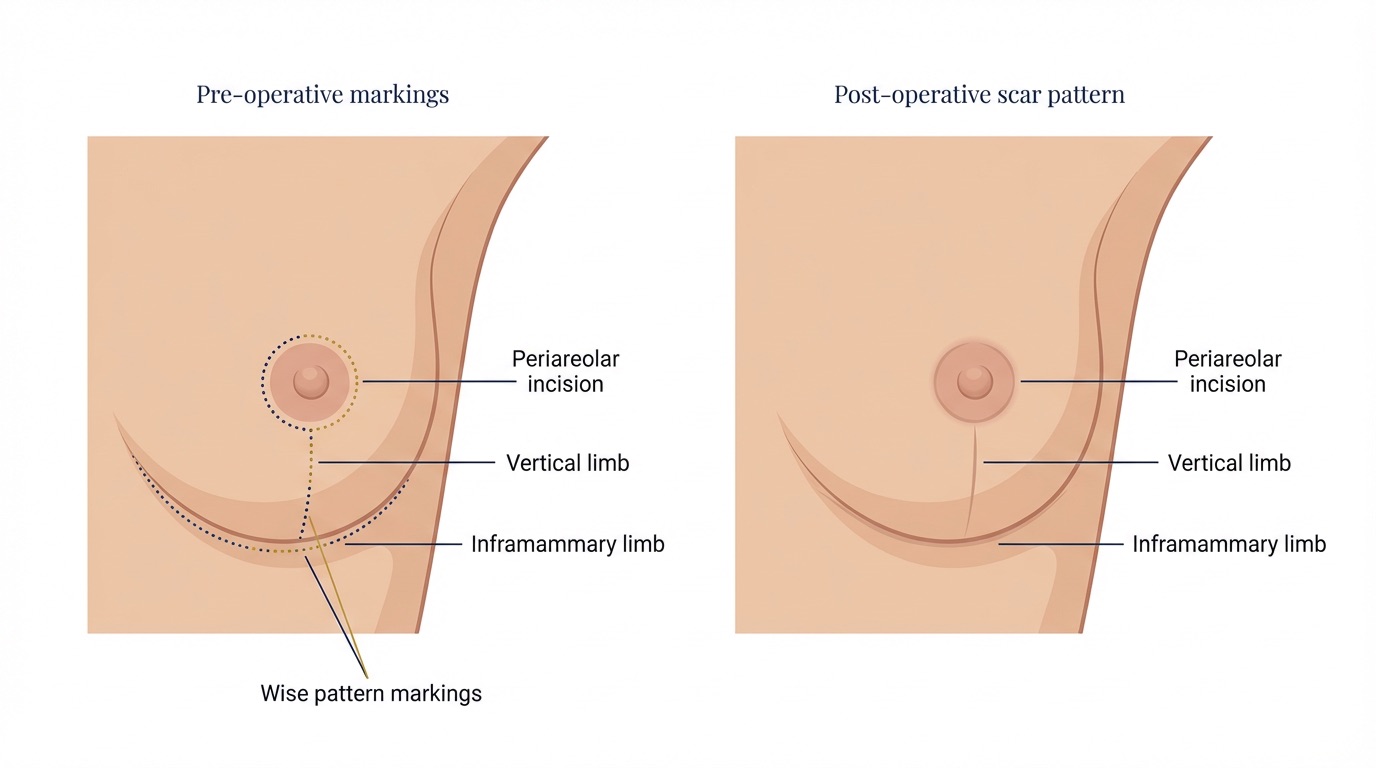
- Anchor or Inverted-T Incision: An incision around the areola, vertically down to the breast crease and horizontally along the crease. This technique is used for larger reductions and provides excellent reshaping.
- Vertical or Lollipop Incision: An incision around the areola and vertically down to the breast crease, suitable for moderate reductions with a shorter scar.
- Tissue Removal: Excess glandular tissue, fat and skin is carefully removed and the remaining breast tissue is reshaped.
- Nipple Repositioning: The nipple and areola are usually moved to a higher, more natural position whilst preserving their blood supply and sensation where possible.
- Closure: The incisions are closed in layers using dissolvable sutures and dressings are applied.
Risks & Considerations
General Risks
- Infection: Risk of wound infection which can delay healing and require additional treatment.
- Bleeding: Risk of excessive bleeding during or after surgery. If bleeding were to occur after surgery and collect within the breast (under the skin), this is called a haematoma and can need a return trip to theatre to address it.
- Scarring: Permanent scars which can fade over time but will not disappear completely.
- Anaesthetic risks: As with any surgery requiring general anaesthesia.
Specific Risks to Breast Reduction
- Changes in nipple sensation: Temporary or permanent changes in nipple and breast sensation, including numbness.
- Asymmetry: Differences in size, shape and symmetry between the breasts.
- Difficulty breastfeeding: Potential difficulty or inability to breastfeed due to removal of glandular tissue.
- Necrosis of fat or skin: Risk of fatty tissue or skin losing its blood supply and dying. Fat necrosis, if it occurs, can feel like hard lumpiness within the breast or even a small amount of discharge at the wound with cloudy fluid. This resolves over time and the hardness would soften; intervention is very rarely needed.
- Total or partial nipple-areolar loss: If necrosis occurs to the nipple-areolar, this can lead to it becoming scabbed and then slowly healing to leave behind a scar and loss of the nipple-areola.
- Delayed wound healing: Particularly in the breast crease and at scar junctions.
Recovery
Garments
- Supportive Bra: Wearing a surgical bra or a soft supportive sports bra 24/7 for several weeks to reduce swelling and support healing breasts.
Wound Care
- Dressings: Keep surgical dressings in place as directed; these are usually robust enough to survive showering and washing.
- Cleaning: Gently cleaning the wounds with mild soap and water is encouraged and we would want you to shower daily to reduce the risks of infection.
Scar Advice
- Scar Care Products: Use moisturisers or silicone sheets/gels to help minimise scarring.
- Sun Protection: Protect scars from sun exposure for the first 6–8 weeks by applying sunscreen or covering with clothing.
- Massage: Once the wounds are fully healed, gentle scar massage can help to soften and flatten the scars.
Follow-Up
- Initial Post-Op Visit: Typically scheduled around a week following surgery to check on the healing process. Sutures are usually dissolving for this procedure.
- Subsequent Visits: Usually seen again 6 weeks following surgery for an early check and around the 3-4 month mark for a longer term check.
- Long-Term Care: Mr Singh remains available for any concerns or further follow-up as required.
Procedure Summary
Ready to Discuss Breast Reduction?
If you are considering breast reduction, please feel free to contact us to answer any questions you may have or to schedule a consultation and learn more about how this procedure may benefit you.
Book a Consultation